The Merdeka HouseStay

陆佑街

1889–1957

The record

A house that stands on the founder’s street owes the town its dates. This is Bentong’s biography as the evidence tells it — and where the evidence stops, so do we. The receipts are on the Sources page.

Tin at the confluence

A British expedition confirms serious tin ground where the Repas and Perting rivers meet — a few hundred labourers already working small diggings in the forest. The place is barely a name yet; local account says the miners’ bund, the “ban untung”, the profitable ridge, will become the word Bentong.
The road deal

The Cantonese magnate Loke Yew — who arrived in Singapore at thirteen and saved ninety-nine dollars in four years of shop work — agrees to cut a road through the mountains from Selangor to the Bentong field, taking payment in mining land. Thousands of labourers follow the road in, and a market settlement becomes a town. Its founders are written into the street grid: Jalan Loke Yew for the financier; Jalan Ah Peng and Jalan Chui Yin for the two managers he sent to open the ground. When disease ran through the camps, Loke Yew and his partners rebuilt the Kwong Fook temple on this street and installed its guardian deities.

The mail comes by motor

Loke Yew’s motor company runs one of Malaya’s earliest motor mail routes through Raub and Bentong — the town is fourteen years old and already on a timetable.

Five clans, one hall

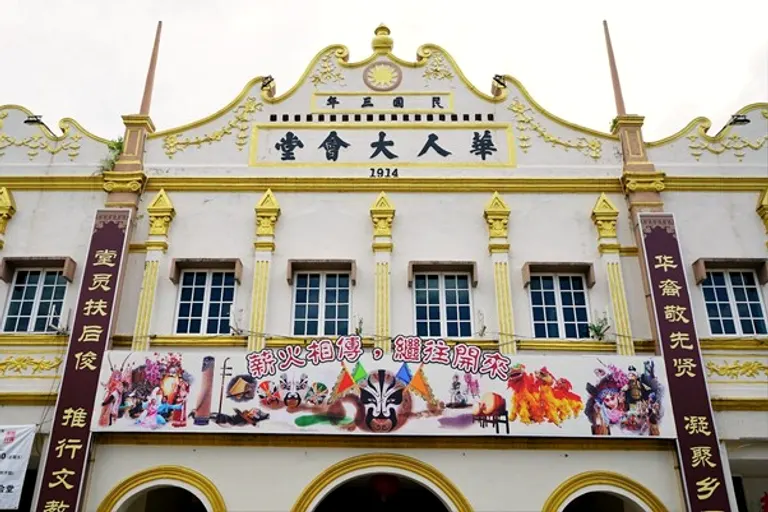
Bentong’s Chinese community — five dialect groups, with Guangxi people in the majority, which still surprises visitors expecting a Hakka town — raises its Assembly Hall on Jalan Chui Yin. The five clans also build Khai Mun School together; it remains the town’s largest Chinese-medium school.

The 1914 Chinese Assembly Hall of Bentong: an ornate cream-and-gold facade with Chinese lettering across the parapet.

A district of its own

Bentong is carved out of Raub as a district in its own right. The shophouse rows of the old grid — this house’s generation — date from these boom decades.

The occupation

War reaches Malaya in December 1941. Under the Japanese occupation the tin economy collapses and the town endures; guerrillas hold the jungles of Pahang until 1945.

The wire comes down

Through the Emergency, Bentong’s rural Chinese are regrouped behind wire into “new villages” — about fifteen survive in the district today. In June 1955 the town is declared a “white area”, cleared of the Emergency’s restrictions: curfews lifted, gates opened, two years before the country itself is free.

Merdeka

On 31 August 1957 Tunku Abdul Rahman proclaims independence with seven cries of “Merdeka!”. The word — freedom, from the Sanskrit maharddhika — is what this house is named for. In Bentong it lands in a town that has just learned what the end of barbed wire feels like.

The highway

The Kuala Lumpur–Karak expressway opens through the main range — Malaysia’s first highway tunnel under the Genting pass — and the journey that took Loke Yew’s road-builders months becomes an hour. Tin has faded; rubber came and went; the valley turns to ginger, durian, and weekenders.

The town opens its archive

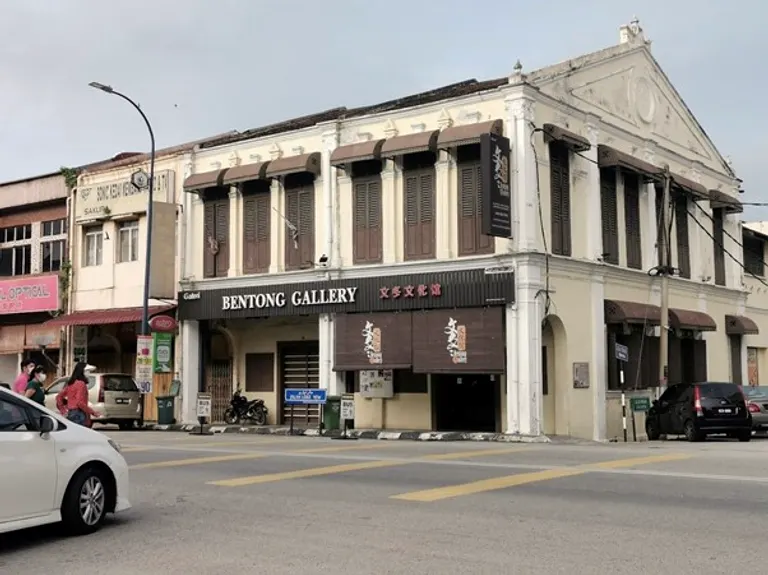
Bentong Gallery opens in the two century-old shoplots at Nos. 17–18 Jalan Loke Yew — the founder’s former Bentong office, around the corner from this house. Three small halls keep the tin years, the pioneers, and the photographs.

Bentong Gallery on the corner of Jalan Loke Yew: a two-storey cream shophouse with brown timber louvre shutters and bilingual signage.

The December water

In the flood of December 2021 the highway closed in three places and the valley paid dearly, including lives lost in the hills above town. It belongs in this record because the house lives with the valley’s weather, not beside it — the same storms that wash the four-o’clock air.

The register opens

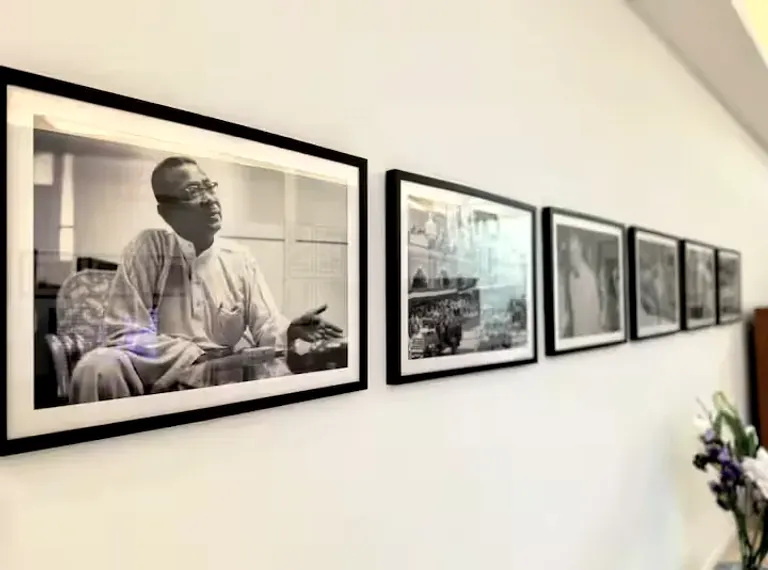
After its restoration — the roof opened over the air well, the terrazzo relaid around the old bones — No. 34 begins taking guests, its walls hung with the town’s photographs. The house keeps the memory of Bentong the way this page does: dated, sourced, and unfinished on purpose.

Framed sepia photographs on the dining-room wall: a portrait of a man in traditional dress beside old street scenes of shophouse rows.
The house’s own wall: the archive it was furnished with.

Pencil note: the exact build year of No. 34 is still being confirmed against the land office. The street’s oldest lots were called a hundred years old in 2017; until the record speaks we claim the 1920s generation, and no more.